Wednesday, August 21, 2013

Excuse this Preachy Rant

Alright. I’m going to do something I don’t do too often…I’m gonna preach at ya for just a second. The situation may be local, but it is symbolic of a much greater problem. So, even though you may not have heard of Matt Pitt, you have heard the story over and again.

In all honesty, had it not been for a tweet from a friend of mine, I would not have known that Pitt, the leader of “The Basement” in Birmingham had been arrested last night for posing as a peace officer, for the second time in two years. That sounds pretty shady, especially for the lead minister of one of the largest ministries in the U.S.
But here’s the deal, this isn’t just the fault of Pitt. And frankly, we don’t know yet why he did what he did. He could be using drugs, he could be a liar and honestly, he is the right age for mental illness to be rearing its head. But, even if this were some big sin issue, it still goes back to problems in the Church. And the biggest problem is what I’m preachin at ya about, and that is simply being known.

Being known relates to two things in my book: first, letting people into our lives and second knowing those people around us. Let’s actually start with the second, since it is, I think less prevalent.
We have a culture that in a lot of ways is screaming, “Expose yourself in every possible way. Tell us what you ate for breakfast and when you go to the bathroom on social media. That song you listened to on Pandora should be in your Facebook feed.” So, as annoying as that is to a lot of people, what it does do is allows people to be known.  It’s kind of like the beauty shop or the bench in front of a hardware store. If someone is around, they are known. Matt Pitt for better or worse was a known entity. People praised him. People critiqued him. And in that regard, he wasn’t some odd duck leading a cult like David Koresh in the backwoods of a sparsely populated Texas County.

And that is why I call it the smaller issue. But there are people that still get sucked into these little off-the-grid bad situations simply because a charismatic dude(tte) who was an unknown entity, who kept hidden, seduced them to the dark side. This isn’t the same hiddenness as my friend James Mark Gulley who, on good authority has had the chance to cut records with major labels. JMG made the choice to remain hidden from “that,” but he is still known. People around Waco see him. They know what he does. And I value the way that he has hidden his talent before the Lord so as to protect his own heart. That is an amazing thing.
The hiddenness I refer to is the guy or gal in a corner who no one seems to know anything about. They seem fine, but there really isn’t any personal knowledge about them. They not only shun the spotlight, they shun the community surrounding them. And again, this isn’t like my cousin who lives out in the country because she likes her privacy. She still does community. She is still known in that regard. So, before I belabor that further, I think you get what I mean.

The first is the greater problem within the Church. And I mean that in the Western sense, because I do not hear a lot of scandal in the Orthodox Church. Maybe there is, but those stories don’t come across my feed too often. What I am referring to is the system that we have agreed to that says pastors are both untouchable and don’t need accountability. Henri Nouwen addressed this in his day. The professional separation that we have accepted for therapists and doctors now extends into the pulpit. And we say, “Awesome.”
But the problem is the Church is a spiritual community. And a pastor needs that. The pastor needs to confess his sins so that he may be healed. The pastor needs to live in community and have outlets to expose her brokenness. Our pastors need places where they are not necessarily venting, but saying, “This is who I am. I feel a little out of control right now. I am actually using drugs. I secretly had an abortion. I might actually be gay.” They need space to say these things in the same protective environs that we expect for ourselves…

…wait. I forgot. We’re evangelicals. Accountability and openness in our lives really stopped after that college phase. We’re good strong people. We have things under control. We don’t really need to confess our sins to one another anymore, because we have access to the Great High Priest Jesus without going to anyone else. My Bible tells me so.
That’s bullroar. (See…dirty words are contextual, that’s just as bad as the real word, but we accept this form right?) It really is. One of the reasons scandals like this rock and will continue to rock the Church is because we have become these isolated spires of feigned righteousness. We shun accountability because we claim privacy is now a biblical virtue. But the truth is…we need each other. We need men and women to say, “Dude…you’re getting weird.” We need wise people to be able to say to our pastors, “I have noticed when I am at the Church that you spend an awful lot of time behind closed doors with so and so. I know your history. Is this something I should be worried about,” because…those wise people actually know their history and care enough to ask…not because they want the latest gossip.

Church. We need one another. We need confession and accountability as awkward as it is. We need to be known and to know one another…and before I use some foul words to emphasize my point…I will end. Love each other people. Love each other enough to hear confession, protect that confession and help the confessor to overcome. And love each other enough to confess, receive that forgiveness, receive that encouragement, receive that rebuke when needed, and receive help when you are down.
Peace out.

L is for the way you Loathe my beliefs

Tenet: Limited Atonement

What I Remember it Meaning: Jesus only suffered enough for the unconditionally elect. Not an ounce more.

What it Actually Means: Atonement is limited in the sense that it is intended for some and not all.

Engaging Limited Atonement

First things first. I have long-held this argument to be pretty nonsensical. I now would say, "Okay, if you really want to think that much about it, go ahead. I just don't think it's a question that we really need to deal with." So, before I go into whether I agree or not, let's get into some quotes, starting with the ever controversial Karl Barth...who apparently from the grave recently followed me on Twitter.


We cannot follow the classical [Reformed] doctrine and make the open number of those who are elect in Jesus Christ into a closed number to which all other men are opposed as if they were rejected. Such an assumption is shattered by the unity of the real and revealed will of God in Jesus Christ.

Uh-oh. Barth didn't hold the party line. It's okay. I like anomalies. 


Next, David Steele, et al.

Christ's redeeming work was intended to save the elect only and actually secured salvation for them. His death was a substitutionary sacrifice of the penalty of sin in the place of certain specified sinners. In addition to putting away the sins of His people, Christ's redemption secured everything necessary for their salvation, including faith, which united them to Him. The gift of faith is infallibly applied by the Spirit to all for whom Christ died, thereby guaranteeing their salvation.


Okay. So, here's the deal. What is being argued is who Jesus died for...in legal terms, for you scholars it refers to penal substitution. All that means is sin is caused us to have a certain price to pay Thus, to redeem mankind, Jesus had to pay a certain price. And to me holding God to a contract just doesn't even enter the picture. I don't see a lot of "Do this, and this will be the payment" in Scripture. Sure, we present salvation that way, "Pray this prayer and you get into heaven...yay!" But a contract with God just really isn't something I think we really need to get into.

I'm sorry for being so flippant, but when I look at the sacrifice of Jesus on the Cross to save men and women from their sin, I don't automatically think, "Now let me look at the fine print." I don't assume when I meet someone, "Let me consult with Jesus to see if He shed blood on your behalf." So, yeah...as stated before I think it is just a nonsensical side road, but I also don't agree with it. I mean, if you are going to go with unconditional election and think that since only these people get in, that Jesus needs to cut a check for this much blood, I guess you can hold to it.

And in all honesty...this post is just going to stop here. I'm not going to go into much further detail, because frankly it doesn't interest me enough to meet my usual daily word quotient!

So, since this lacks my normal amount of text and you still clicked over today, I will leave you with a picture of a panda riding a plastic horse:

Tuesday, August 20, 2013

The Sin of Corporate Shame

So, coming off of the Calvinism series I thought I would post something light hearted, but then I fell into one of those wrong place, wrong time scenarios. Maybe, it wasn’t actually, but it was at least quite uncomfortable. And since I learned a pretty valuable lesson, maybe it was actually right place, right time, because the lesson came without being scandalized.

This is also one of those posts where I need to give a disclaimer: the reason I am sharing the story below is because it sparked transformation in my heart. This is not to bring shame on this young lady...the intent is actually to break patterns of public shame in our society. As a matter of fact, I don’t and probably never will know the lady. As you will see in the course of reading this, I never even saw her face. She could sit beside me at Panera tomorrow, or be at the same birthday party as me and we talk for 20 minutes and I would never know. That said, let’s start with what happened before we go into what I learned.
A buddy of mine and I were supposed to hang out on Saturday. We decided to grab lunch. He currently eats vegetarian so it limits the options a little in Tuscaloosa. I normally love giving shout outs on here to different places, but because of the nature of the story, I will only say this: we were at a restaurant not next to campus (University of Alabama for those who don’t know…RTR!), but not too far away either. And it is typically more of family hang than a college place.
We were sat in this little corner and in my direct line of sight was a young lady, obviously passed out drunk with her head and arm sprawled across the table with her two friends. She remained that way until the two friends decided it was time to go. The young girl wanted nothing more but to stay in the booth and kind of fought at first…then she passed out again. At this point I decided it was best to focus on my friend and just leave these three to their business. The young man who was helping her, dragged her and then the story takes a turn for the worse.
The young lady was wearing one of those things you might see on the website shirt-or-dress. That is to say, she was wearing rather a short dress. I probably would not have noticed except for the audible gasps all around the room, which drew my attention back to them escorting her out. The reason for the gasps was in dragging her, he pulled up (unintentionally) her dress and she was not wearing any underwear. In other words she was exposed for the entire place to see. It was utterly terrifying. But my instinct in that moment is what I want to focus on here.
In that moment, and I think some of you have been here with me, all I wanted was to find a tablecloth, a shirt, anything just to cover her up and yell at everyone to stop looking. All I wanted to do was protect her. I wanted to yell at people to stop gawking. I wanted to carry her back to the car, yell at her friends for letting it get this far, find her best friend from high school, the one she really trusted, drive her to Tuscaloosa and watch over her in the ER. Ask that best friend if this was a problem, do we need to talk to her parents. Post a guard of men and women around that room so that no one could look down upon her. I just wanted the shame to stop.
And the thing is…I don’t know her. I never saw her face, yet my instinct in that moment was to cover her shame. And I think that what it revealed to me is that the Father heart of God was more appalled in that moment by the corporate sin of shaming her, than her getting that drunk. I think God was more distraught that no one seemed to want to help her, but they all wanted to talk about her. I think God was disappointed that I couldn’t get up out of my seat to help her because “they” might think I was with her. But…grace. God let that moment torture me for the weekend to teach me about grace and shame.
God allowed me look at what we all know happens and whisper, “I hurt for her. You should hurt for her. You shouldn’t judge her.” He allowed me to see that in the moment of public sin there are actually two sins happening: first, her sin of drunkenness, and second, our sin of judgment and shame. We sinned in that moment. Every thought of self-righteousness…sin. Every thought of judgment…sin. Every thought of pride that our kid would never do that…sin. Every worry that our son or daughter would be next…sin.
There is this thing called righteousness. We need to seek the Lord and change our heart toward sin. We need to let the love of God transform us and lead us into that path of righteousness. But we do not judge our brother and sister in their sin. We do not mock them for mistakes they have made. I am thankful that these two friends at least watched out for her. I am thankful that assumedly she was sexually not taken advantage. I am ashamed that we corporately however took advantage of her state to assuage our own egos and say, “At least I am not like that sinner.”
This is not a condemnation of drinking alcohol. This is not a plea to tell women to dress modestly. There are so many interesting views on both of those things. What this is…is a plea to look at someone like this young woman and remember that not only is she someone’s daughter, she is also imago dei…the image of God. She is our sister. She is our friend. She is our daughter. She is genetically just a few strands different than you. And you know what…she made a stupid choice. But so did the bartender…so did her friends…so did we in that restaurant. There were all these bad choices that culminated in a situation where as patrons of that restaurant we should have decided, “Let me either help, or at least divert my own attention away.”
Instead waiters and waitresses yelled apologies about this horrible thing, and parents whispered to each other and young men and women gawked, and some even laughed. And we heaped condemnation because someone made a bad choice. Who knows, this could have been the first time she had ever drank, probably not, but it’s possible. Who knows, she could be on some sort of medication that exacerbated the effects of alcohol. Who knows, she could have been hurting because of other decisions she made and she thought getting drunk would give her relief. We don’t know.
And so, let me draw this overly-emotive piece by saying, particularly to the Christians: Don’t judge this woman. Help her.  Grab that table cloth. Help the young man carry her. Confront the bartender or waiter who served her. Just do something, anything, except join in the public sin of shame and condemnation…because you know what…Jesus didn’t. Instead, he looked down at the woman caught and adultery and whispered, “Where are your accusers?” And I hope we can ask the same thing.

U is for the way you Undermine me

Tenet: Unconditional Election

What I Remember it Meaning: If you're chosen, you're in, period...you can't not choose God.

What it Actually Means: God has chosen from eternity to extend mercy to those he has chosen and to withhold mercy from those not chosen.

Engaging Unconditional Election

Okay. So I looked up a couple of people's thoughts on election and discovered, just two tenets in and we are already getting down and dirty. Before I get into some Mark Driscoll, I do want to share I was disheartened at his lack of a broader perspective that includes the Catholic tradition, let alone the Orthodox Christian. But...we'll let him throw the first mud, which can be found here.

But first a little detour to explain his comments. Rooted way back in Augustinian theology was this thing called prevenient grace. Basically it means that before man has been reconciled back to God, man has been given a choice whether to partake in the salvation of Jesus Christ or not. So, basically there is this opportunity that God affords to man that involves free will. That's right folks. Just two tenets in and predestination rears its head.

The doctrine of prevenient grace has been very controversial because it has little, and arguably no, biblical basis. Furthermore, it assumes that a person can simply exercise faith, when the Bible says not only is salvation a gift from God, but also even the faith to believe in Jesus is a gift of God’s grace.
-and-
Because heaven is God’s home, he has the right to decide who lives there forever with him. Since we are saved by grace, which is a gift that God gives, he has the right to give it as he determines is best. And, we need to trust him to do what is right and best. 

Now, let's get a Catholic voice in here. Mr. Thomas Aquinas. (This dude is legit!)


Aquinas also reminds me of these.
God wills to manifest his goodness in men: in respect to those whom he predestines, by means of his mercy, in sparing them; and in respect of others, whom he reprobates, by means of his justice, in punishing them. This is the reason why God elects some and rejects others.... Yet why he chooses some for glory and reprobates others has no reason except the divine will. Hence Augustine says, 'Why he draws one, and another he draws not, seek not to judge, if thou dost not wish to err.

And now someone from the conditional election camp...none other than the author of The Knowledge of the Holy, A.W. Tozer.

God sovereignly decreed that man should be free to exercise moral choice, and man from the beginning has fulfilled that decree by making his choice between good and evil. When he chooses to do evil, he does not thereby countervail the sovereign will of God but fulfills it, inasmuch as the eternal decree decided not which choice the man should make but that he should be free to make it. If in His absolute freedom God has willed to give man limited freedom, who is there to stay His hand or say, ‘What doest thou?’ Man’s will is free because God is sovereign. A God less than sovereign could not bestow moral freedom upon His creatures. He would be afraid to do so.

Alright. So a lot of guys talking about a lot of things that we don't normally think about. It basically boils down to God predestines or we have free will. My buddy Samuel just left and talked about how he understands those concepts in complimentary terms which is pretty cool. Me being a theological mutt, I am kind of all over the place. So, once again, let me jump over to the Orthodox Church and quote a couple of guys.

First, is St. John of Damascus, who adds this to the debate:
We ought to understand that while God knows all things beforehand, yet He does not predetermine all things.  For He knows beforehand those things that are in our power, but He does not predetermine them.  For it is not His will that there should be wickedness nor does He choose to compel virtue.  So that predetermination is the work of the divine command based on fore-knowledge.  But on the other hand God predetermines those things which are not within our power in accordance with His prescience.


Following him is St. Gregory Palamas:
Therefore, God does not decide what men’s will shall be.  It is not that He foreordains and thus foreknows, but that He foreknows and thus foreordains, and not by His will but by His knowledge of what we shall freely will or choose.  Regarding the free choices of men, when we say God foreordains, it is only to signify that His foreknowledge is infallible.  To our finite minds it is incomprehensible how God has foreknowledge of our choices and actions without willing or causing them.  We make our choices in freedom which God does not violate.  They are in His foreknowledge, but ‘His foreknowledge differs from the divine will and indeed from the divine essence.’


So...that is a lot of information. And your head may be spinning as much as mine. But when I pull back from the lens, here is what I see. The playing field here is not really even salvation...it's the nature of God. That is why this is so heated. You have a crew of people (Calvinists) emphasizing God's sovereignty and a group arguing that this brand of sovereignty somehow prevents God from being good. That is really what is at stake here. Is God sovereign or is He good?

So, if you know me, you know quickly where this going...I'm Team Jacobus! Always have been, probably always be. I think of myself as a pretty teachable guy, but the way that I approach the Lord, I just don't see this changing too much. The problem is, I don't see anyway around double predestination once you start down that road. If God chooses certain people, there is no way around him not choosing the others. Calvinists argue that this view is too anthropocentric and not christocentric enough. Arminians argue that Calvinists are missing their point altogether.

The deal is, as I understand goodness, a supreme deity cannot be good and choose arbitrarily that I am elect and my buddy Ryan isn't (which is funny, because at one point he was a Calvinist who believed he wasn't chosen...now that sucks!). This isn't about God choosing based on merit. This is about God giving over the reigns of choice to humanity. And if that limits the sovereignty of God for you, I'm sorry. I get it...I really do. I like the idea of not having any responsibility because, you know, God chose that. (Okay, low blow on my party and caricature that nearly no good Calvinist would hold.)

I fall in the camp of God's foreknowledge, instead of God's predetermined choice. And part of it comes down to what many saints throughout history have argued: God will not cause men to purposefully sin against Him. First, thing's first: Pharaoh. Yikes. I concede you are right...but even in the end Pharaoh had a choice. The plagues were a testing ground for Pharaoh and God ultimately did give him a choice. Re-read it. There are plenty of places where it says that Pharaoh hardened his own heart. Ultimately Pharaoh led himself to his own demise by pursuing the Jews into the desert.

Instead of saying that God caused Pharaoh to sin, I am firmly in the camp of saying that God knew Pharaoh's heart and therefore his response. God causing someone to sin against Him is like Jesus' house divided. God invoking sin against Himself just doesn't work. God choosing His own creation to cause the death of His Son is a terrifying thought. Throughout Scripture it says that God knows the heart of man. Therefore, as I said, I go with foreknowledge...not predestination.

So, I think this lands me square with 0 points this round. I know, how disappointing. But I think I will choose to get over it.

Monday, August 19, 2013

T is for the way you Tongue-lash Me

Okay, a quick note, each of the titles of these posts are a tongue-in-cheek play on Nat King Cole's L.O.V.E. and Calvinism's TULIP. And now in the words of Wayne's World, "Game on!"

Tenet: Total Depravity

What I Remember it Meaning: There is nothing good inside of man.

What it Actually Means: The inability to save oneself from sin.

Engaging Total Depravity

So, apparently my Calvinist education greatly failed me here...or my personal Calvinists missed the point themselves. Until going in and looking at what was meant, I have always believed that total depravity had to do with there being nothing good inside of us. I'll admit I was wrong. Not a problem. And so, I can say, that in terms of the debate, I am probably at least a 1-point Calvinist if you are keeping track. (And many friends are scratching their head that I ever agreed to total depravity.)

So, at this point, let's do two things: first, look at what some people say about total depravity, and maybe explore why some of us believe Calvinists are communicating something else.

First, John Piper. If you are curious what am I citing by Piper here you go. Piper has four ideas that are basically an extended argument:
1. Our rebellion against God is total. Apart from the grace of God there is no delight in the holiness of God, and there is no glad submission to the sovereign authority of God.
2. In his total rebellion everything man does is sin.
3. Man's inability to submit to God and do good is total.
4. Our rebellion is totally deserving of eternal punishment.


Now on to some John Wesley (and thanks for the assist found here!) [Christianity] declares that all men are conceived in sin,” and “shapen in wickedness;” — that hence there is in every man a “carnal mind, which is enmity against God, which is not, cannot be, subject to” his “law;” and which so infects the whole soul, that “there dwelleth in” him, “in his flesh,” in his natural state, “no good thing;” but “every imagination of the thoughts of his heart is evil,” only evil, and that “continually.”

But as soon as God opens the eyes of their understanding, they see the state they were in before; they are then deeply convinced, that “every man living,” themselves especially, are, by nature, “altogether vanity;” that is, folly and ignorance, sin and wickedness.

There are really way too many Scripture verses to list where total depravity came from. And the truth is that were it not for the willing sacrifice of Jesus on the cross we would not find it within ourselves to wholly seek after God. And really where Calvinists and Arminians split ways in terms of depravity relates to a theology called Christian perfection. Basically, Wesley, leaning on Polycarp, argues that 1. The Christian's deliverance from sin was from "all sin" (1 John 1:7); 2. Love and sin are mutually exclusive; and 3. "That holy love produces a life that honors God." This is why some Calvinists argue that Wesley didn't really adhere to total depravity.

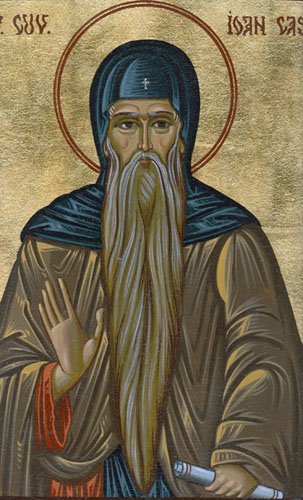
So, basically Calvinists and Arminians line-up here. So do Catholics. So, case closed? Not quite yet. See, Protestants and Catholics aren't the only Christians at the table. You have to remember our Orthodox brothers and sisters. They hold to a belief referred to as semi-Pelagian or simply "fallen nature." Basically, we were damaged by the fall, but not completely. It was first espoused by John Cassian.

Illustration time: the drowning man. God throws a rope to a dude who is drowning. The Orthodox Church says, "Reaching out for that rope is an act of free will, so we are at least partly involved in this salvific process." Or in other words man has to take the first steps to reach to God. He can't find salvation without God, but he has to decide that rope is worth grabbing. And as is prone to happen with Calvinism...this is spilling into other parts of the theology. So, let's draw to a close.

Cassian's beard is amazing.
I can get down with Wesley and Piper here. There is no salvation except through the work of Jesus. However, as Cassian argues there is a willingness on my part to come to that place. Part of this argument will take place in the post on irresistible grace. But for now, I will say my initial thoughts are about 75 percent, maybe 80 toward total depravity, because Cassian makes a lot of sense.

Before I let that go, I will say that Cassian's view has always intrigued me. Because it implies that at birth we are limping, not paralyzed if that makes sense. It implies that even from an early age we are struggling internally, not complete selfish jerkfaces. There is a part of us that recognizes we need to do good, and not just in terms of ourselves. And we see this in places such as atheists and social justice. Denial of God, let alone the Christian God, yet a desire for good and justice. That would be the view of fallen nature as I understand it. Sure, at the end of time, there is no salvation, but there is still something going on inside of you that seems contradictory. And below I go into that a little more.

What I have always struggled with is those who argue that there is nothing good in man. My standard argument has always been imago dei. What does that mean? Simply that we are made in the image of God. As such there is something inherently good within us. No other part of creation is said to be formed in the image of God. Sure, the rebellion of Auntie Eve and Uncle Adam messed some things up, but being an image bearer, from the moment we are born (or before...not opposed to that), means something. To bear the image of God, even in our fallen, sinful nature has to be accounted for...

...as does our theology of Jesus. If we call Jesus sinless that means we have to look at total depravity. Or we have to clarify what that sinless word means. If Jesus was sinless from birth, it meant that he had the ability to choose God from the get go. It meant that something was in place within Him to choose God from an early age. I guess the Father could have been beckoning him early and often and Jesus just responded, but I don't see that. So, yeah. Total depravity. I guess I am still wrestling through it. And I think that is fine. And there are those who argue that an Orthodox view does not have to include total depravity. It does have to reconcile fallenness, that much is true. So, I don't know...toss up here on whether I hold to total depravity. We'll give me .5 stars.

Sunday, August 18, 2013

TULIP Time

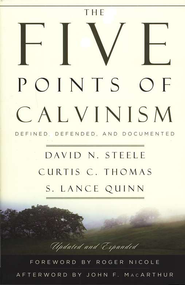
So, out of curiosity is the Calvinism argument even still a thing? I think it is. At least here in Alabama it is. I mean, I hear myself on a somewhat frequent basis say things like, "John Piper is such a dillweed and Mark Driscoll is a," well, I can't say that word and keep this family friendly. But suffice it to say, the frequency with which those statements come out of my mouth indicates I am still involved in the Calvin-vs-Saint Arminius debate. And it doesn't take much to see which side I fall on.

Tulips actually never wanted to be involved in the conflict.
But lest you TULIP huffers get too upset with me, here's the deal. The next five days (after today) is all about your precious theology. Stating what it is...what I think it means...correcting any faulty logic on my part...and finally writing if I agree or disagree and why. So...hopefully I will learn something. And lest you think I am being terribly offensive, know that I am just teasing you the way an older, wiser brother teases his wayward brother or sister that will one day learn better. I mean...I am just having a little fun. I don't mean any offense...kind of.

Okay. That said, let's throw out some history and some generalized thoughts. And for full disclosure, I have not started my research and reading yet, so this is tainted in James' initial thoughts, memories of undergrad (because oddly we never touched this in seminary), and battle wounds from the campus of the University of Mary Hardin-Baylor, where they actually let card carrying Calvinists carry battle axes to correct any prodigal Protestants protesting in the religion department. (Nice alliteration, eh?)

First, for those of you who either don't know, or maybe don't care to research it on your own, what the heck does TULIP even mean? Here is a nice little chart for you.

T - Total Depravity
U - Unconditional Election
L - Limited Atonement
I - Irresistible Grace
P - Perseverance of the Saints

Basically, these are the five tenets of Calvinist theology. At different times I would say I was about a 3.5 point Calvinist (agreeing with 3.5 tenets). Now, looking at the list, and relying on a faulty memory of things studied in approximately 1998, I would say I'm maybe a 1-pointer, I could see myself affirming two. I don't know. We'll see at week's end.

So, where did it all begin? Much to the delight of the aforementioned Driscoll, the internet would have you believe with a UFC match as documented here:
To those of you who didn't pick up on this...this picture is photoshopped. Actually it is not likely that Calvin and Arminius ever really met. If they did, Arminius probably was not theologically advanced enough at four years of age to defeat John Calvin on his death bed. That is right. Jacobus was only four (maybe even three depending on the time of year) when old Johnny kicked off. The great Calvin-Arminius debates were actually between followers of both men after their deaths. So...there's that.

And then there is this...these debates actually were a continuation of problems faced all the way back to Augustine and Pelagius in the 5th Century. So, really these dudes were kind of late to the game. They were just some of the first Protestants to delve into that territory. And since Protestants are still kind of skeptical of Catholics, we call this thing the great Calvinist debate.

One final point historically...if anyone really deserves a bad reputation out of the whole ordeal it wasn't John Calvin. Sure...he bore the name and he advanced the theology, but it was Theodore Beza...aka the Bruiser who created the long-standing rift between Lutherans and Calvinists.

So, there is your history lesson.

If these stones could talk of the many battles they have seen
Now fast forward to the late-1990s, early 2000s. The setting is the somewhat picturesque campus of The University of Mary Hardin-Baylor. As mentioned above Calvinists are allowed to openly carry weapons. Even nursing students are forced to keep a cheat sheet of the play-by-play revisionist history enforced by the 9th Street Hooligans. We Arminians were forced underground. We knew there were others like us, but the enforcers knew our hidden meeting spots too well.

The biggest problem was that Calvinists also maintained a great spy network. They would use a seemingly friendly dude to approach you, become your new roommate and then keep tabs on what books made it into your room. It was a scary time. Sometimes in order to get that new book you wanted to read you also had to sneak in a book by someone like Donald Miller or Benny Hinn just so your roommate thought you were actually just flaky...not Arminian. Okay...enough hyperbole.

The truth was, there was a big Calvinist thing going on at UMHB when I was there. It was just what happened. Some of the more influential leaders in student organizations, and as such, some of the most well-spoken leaders on campus were Calvinist. There were some people who took it too far. There were people who honestly seemed on the verge of worrying about the salvation of those who didn't adhere to Calvinism. Really. It happened. Granted they were few and far between, but it happened. But the bigger problem was something that caused me a lot of personal pain.

Not all...not even a majority, but enough to carve some terrible memories, of the Calvinists I ran into were just jerks and terribly mean. They would intellectually pound the snot out of you and then call you an idiot. They were abrasive, cocky and not the kind of people you wanted to spend your time with. And because of the influence of many of them, I hit the sideline. I removed myself from all things campus-oriented and invested in the local church. That probably would have happened anyway, because I loved my church...but these jerks and jerkettes sure helped that process.

Fast forward to the late-2000s. I move to Los Angeles. I start seminary. I expect the who Calvinism kerfuffle to begin again...but it doesn't. It really wasn't that big a deal. The only time it became an issue was when talking about leaving and going to a church that buys into anything and everything John Piper, Mark Driscoll or Fancis Chan says. And the deal is, at least Piper and Chan, seem like pretty decent guys. They really seem to love the Church. They just espouse some beliefs I'm not on board with. But dudes like Driscoll frustrate me. Driscoll is like all of my UMHB antagonizers rolled into one. He is rude, he is...well, I'll just stop there. He's honestly not anywhere near Westboro bad, so I don't want to attack him too much. Especially because of this last point for today...

My biggest issue with neo-Calvinism is the divisive nature of it. It's not entirely one-sided, but it is brought on a lot of the time by neo-Calvinists. Unlike Charismatics, who kinda keep to themselves, Calvinists love the public square. Sure, both groups get made fun of, but Charismatics get made fun of more for their eccentricities, and the jokes are generally good-natured. But enter the Calvinism banter and there is usually a bite to it. And that is my biggest concern. More than the theology it is the way that Calvinism fractures the Church. It's more divisive than spiritual gifts, than evangelism, than the Eucharist, all of which I would say are more important issues.

So, that is where this is headed. I hope to kind of define and engage Calvinism in some friendly terms...correct some misunderstood parts...and say why I can agree with the tenets...or not. So...let's start that...tomorrow.

Friday, August 16, 2013

Simple Thoughts...Dirty Words

So I was on Facebook the other day and saw something that really upset me. Granted, this is probably a daily occurrence for many, but I was really frustrated and wanted to lash out at the person. What kind of archaic nonsense was this dude posting? And why was I upset at him for holding and espousing such a traditional view? So, I did what any reasonable person should do instead of would do; I let it go…and then three days later wrote a blog post about it that may or may not be read by said friend (I still love you Chris…pinkie promise).
So, what was this egregious offense that my brother committed? He posted an article about why a dude he greatly respects in the Church doesn’t cuss. It’s okay. Judge me. Really, it’s fine. I get it. We Christians may be internal messes, but swearing is just not something that has been a part of our experiences. The pastor is coming around? You remind your kid to be on his best behavior and even your unsaved husband/wife steers clear of bad language. It’s just a tenet of our shared faith. But then again for a while so was owning slaves, not playing dominoes, drinking wine, not drinking wine, purchase of women for wives, paying men to marry your daughter, cutting off enemy foreskins, calling down bears to eat children…you know, all that great biblical stuff.

 You can see where I’m going here. There are all sorts of things in the Bible that we as (post)modern Christians shun. For instance, those polyester blend grippies you are wearing…sin. That eye shadow and your favorite pair of hoop earrings…sin. In other words, there are some things that we have reasoned out of the Bible for this or that reason, and there are other things that are non-negotiable. It really is quite interesting and it is one of the things that makes the Church so curious…and I mean that in the true sense of curiosity, not some backhanded sleight.

So, before I get back to language, let me make a blanket statement that I stand by probably 99.9% of the time (you have to leave yourself an out, right?). I will never fault someone for holding a traditional Christian view.* (Wait…why as there an asterisk?)

* I will never fault someone for having a traditional view as long as they have searched the Scripture, searched their heart, actually made this belief their own and not an inherited view of someone else. I will respect you for having the wherewithal to actually search these things out and make them your own and not blindly holding to grandma’s Presbyterian beliefs because she drug you out of bed every Sunday that one summer you stayed with her. I promise that is true nearly 100% of the time.

So, now back to our previously scheduled post about bad language. There were two reasons that this particular article just struck me wrong, well three. Let’s actually start with the third reason: I have a bit of a foul mouth. I picked that up at seminary of all places. I guard it and hide it pretty well, but at times…phew. Like last Friday. Yikes. Thanks to all of you who helped me through that ordeal. So, that was probably an initial cause for my reaction. But now let’s get into the meat of this issue.

Words on their own hold no power or meaning.
Simple enough right. Try speaking English in a small village in Kazakhstan. You will find this principle to be true. The truth is that the words we speak only have the power that we give them. I think the classic example for us Americans is seen in, of all places, an Austin Powers film title. The word “shag” is so offensive to our British cousins that they couldn’t release the film with the full title. No…really. That happened. To Brits, the word shag was that offensive. But you could hear that word in just about any church in America without the slightest glimpse of embarrassment. Or how about the time my buddy went to Amsterdam on a mission trip? He was walking down the road with missionaries and was told to look out there was #%$@ in the road. That is simply what they called poop. That is what was in the road, and that is what that word referred to, period.


Look at those smouldering eyes. He's after your cows.
The words we use are not as important  as the way we use them. But being so rule-based as we Christians are we decided to relegate this certain set of words as off limits. That was the solution. It’s like corralling all the bulls you own, but then letting all of your cows wander throughout the state of Wyoming with no fences. Sure…your bulls won’t knock them up, but I can guarantee you there are other bulls that will. Before I belabor this point too much, let’s transition.


I could care much less about your tongue than your heart.

There I said it. You replacing all of your cuss words with our pre-approved church conversion chart does not impress me. Your darns and craps and shoots just don’t cut it in my book when it comes to purity. Really…they don’t. All you have done is (look at point 1 again to clarify this) replace our corralled words and given the same intent to our approved words. That is really all you have done. I know your intent was good bro. I really do…and I honor you for trying, but when you are thirsty and you pour moldy water out of a cup and refill it from a mud puddle you really have not obtained the change you desire.

And truth be told, this point extends further out than exchanging cuss words. More importantly it takes on the way we talk to and about each other. The other day my friend Donovan posted a youtube video of a pastor railing on his congregation. I mean, he was getting after it saying, “You are one of the sorriest members of this congregation” to some poor dude and saying there was no way he would perform his wedding.

And here is where I disconnected from the original article. That dude was so hung up on a few choice words that he missed the heart of what was behind it all. He missed the mark on what sanctification is about. He missed how the Kingdom of God breaks in and radically transforms some people. He missed how certain people take years to work certain kinks out of their lives. And he reasserted that good Christians simply don’t do this…without really even considering why language is a big deal.

And that my friends is the main thing…we need to think about these things. Gay marriage? Think about it. Tax evasion? Think about it? Euthanasia? Think about it. Yelling at your kids? Think about it. Hiding your secret addiction? Think about it. We need to be a people who have worked out our faith with fear and trembling. The world sees through fictitious Christianity that spouts off learned doctrines that have been passed on from great men and women, but have not actually taken root inside of us. Why is cleanliness next to Godliness? Why do people say, “God helps people who help themselves,” is in the Bible? Why do we not know enough to understand where these things come from? Next time you pick up on any of that craziness, be like Dikembe Mutumbo and wave that finger at them...John would be proud.

So, in terms of this dude and his not swearing…good on him. But tell me why you have selected this set of words, and why you think it is really a holiness issue other than, “Well, you know…it’s always been that way.” Well until the Civil War so was slavery. Until the 1960s so was radical racial and socio-economic segregation. And if there is anything we as Christians need it is a faith that involves our heart, soul, mind and strength, and is not simply a reflection of our forefathers and mothers who did all of the hard work so we could fumble at the finish line.